
Send a link or a single file, or put it on the screen in the room. It opens in any browser, and what arrives is the structure itself, still navigable and still in your colours.
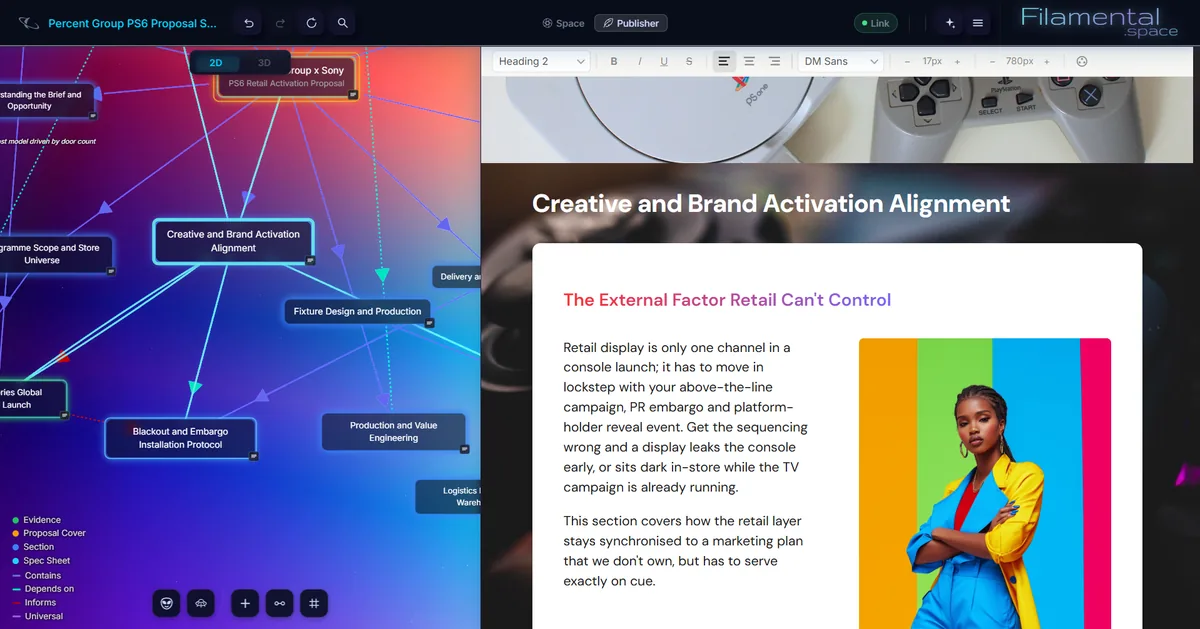
Most ways of sending work press it flat first. Here your reader gets the shape itself: they turn it, tap a node and the page opens, so they can read it in your order or go straight to what they need.
It’s read-only, it works on a phone, and there’s nothing for them to install.
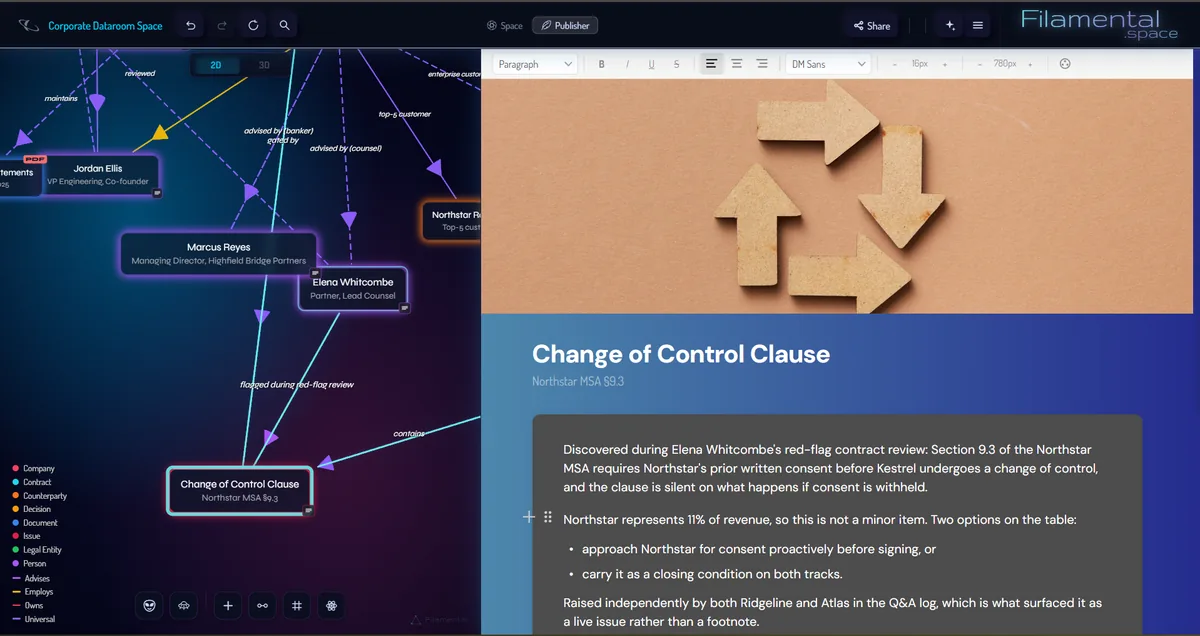
Both are made from a snapshot of the space as it stands when you press the button. Pick whichever suits the person waiting for it.
Paste it into an email, a message or a ticket. It opens on a phone as readily as on a desktop.
Expires by itself after 180 days, so nothing you shared last year is still quietly available. The free plan keeps one active at a time.
The whole thing in a single file. Attach it, archive it, or put it on a memory stick and post it.
It’s yours outright and keeps working indefinitely. The download is part of Professional.
Press Present and the structure fills the screen and turns slowly, with nothing else on it. Put it up ten minutes before you start, and by the time you begin the room already has the shape of it.
The same button sits in the corner of every link and file you send, so whoever receives it can put it up in their own meeting.
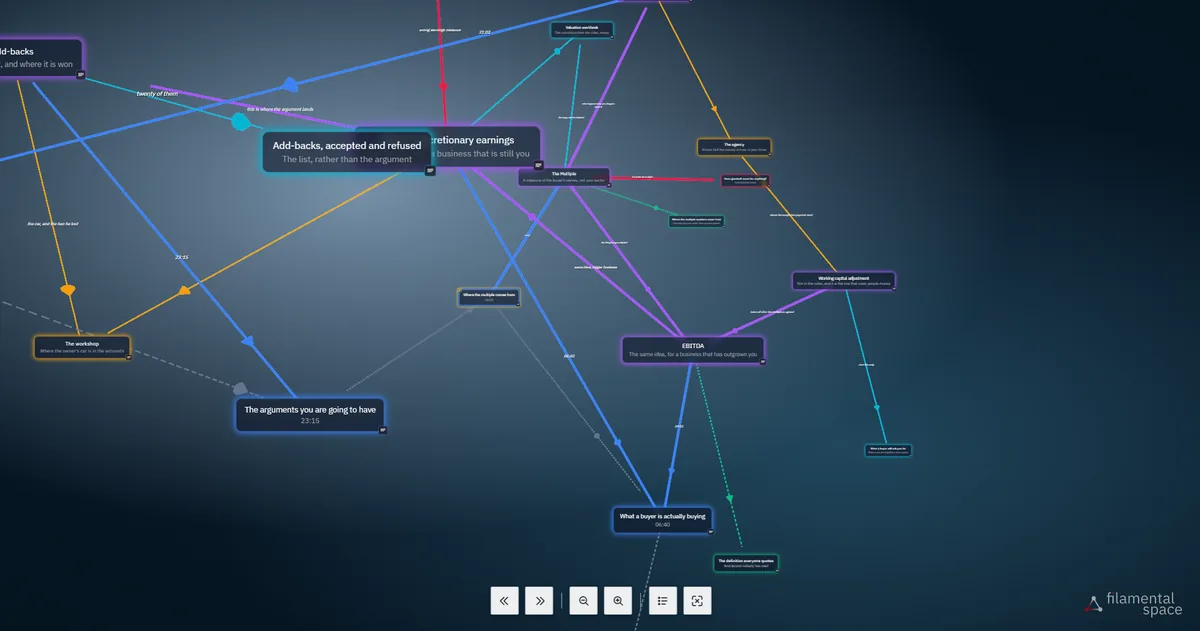
Presenting from the app is part of Professional, along with the download and a second published link.
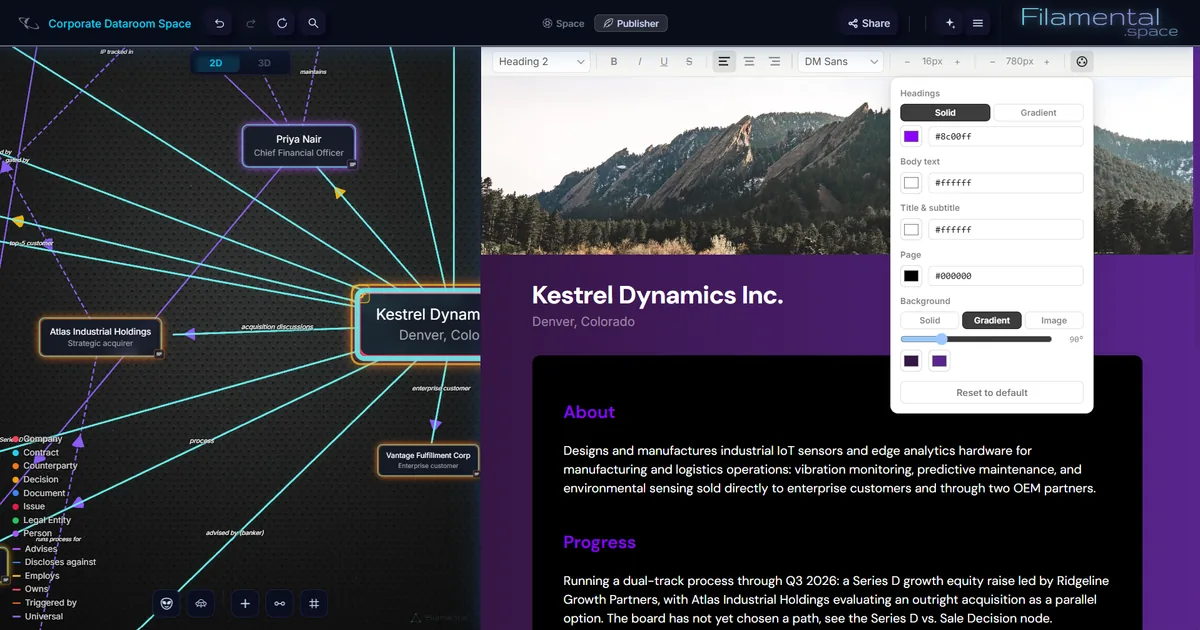
Publisher Studio doesn’t need Space Studio first, or at all, and plenty of people never use it. Use it like any document editor, with pages, covers, long-form formatting and links between pages.
The way you arrange the pages becomes the contents page your reader navigates.
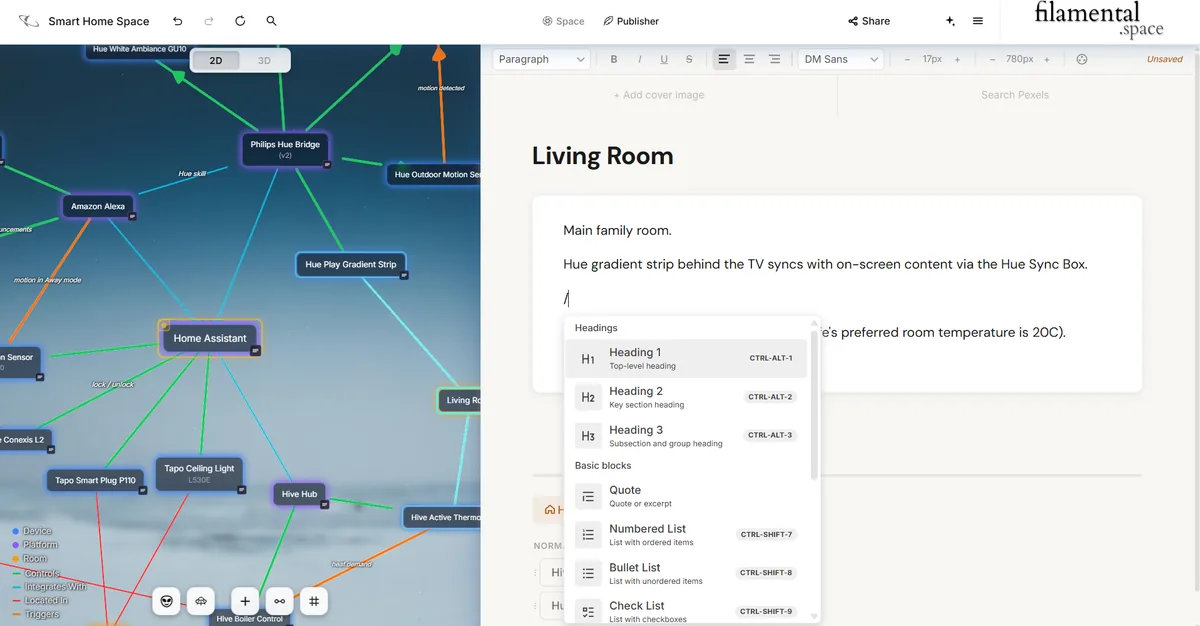
Headings, body, title, page and background each take their own colour, and the background can be a gradient or an image. Covers, fonts and page width are yours to set too.
Somebody opening your work should be able to tell that a person made it, and which person.
Snapshots are encrypted on your own machine before they go anywhere. We can’t read a shared space, with or without a password, and no setting changes that.
A password decides who gets in once they have the link. The encryption is always on.
We don’t want your data. It belongs to you.
What you send is the space as it was at that moment. When you’re ready for them to see the new version, you push it to the same link.
Then it expires on its own, so nothing lingers. If you need something permanent, the downloaded file never expires, and it’s part of Professional.
Publish during your first fifteen days and your links keep working for their full 180 days after you move to the free plan, and you can still revoke them. What changes is that updating a link becomes part of Professional, and the free plan holds one link at a time. Nothing you’ve sent stops working. We won’t leave you stranded.
Building a structure is free and always will be, and so is your first published link. What you pay for is the part that leaves your computer: a second published link, updating one you’ve sent, the file, and Present. One plan, no upselling.
We believe in ownership, so a file you’ve handed over keeps working whether or not anybody is still paying for anything.
No card, no account, nothing to cancel. Build something, publish it, and watch somebody open it. It won’t be your best creation, but you’ll enjoy the experience.