For IT
Your work is astonishing
The work was invisible by design. Systems ran, tickets closed, upgrades went smoothly. The only time anyone noticed IT was when something failed.
The reward for systemic thinking was invisibility.
That is changing. The shift to AI has put a premium on the people like you that already understand how systems connect. The dependencies, the recovery paths, the real shape of infrastructure underneath the org chart.
Filamental is where that knowledge lives, where you can see it, work with it, and show it to anyone who needs to understand what you have been holding together.
What current tools miss
Your infrastructure tools each show one slice. The monitoring platform shows what is live. The CMDB shows what exists. The ticketing system shows what broke. The wiki shows what was written down two years ago.
None give a holistic shape of how it all fits together.
That picture lives in the heads of the people who maintain the systems. It moves with them when they leave. It cannot be queried, audited, or handed over.
We listen and we develop with you in mind.
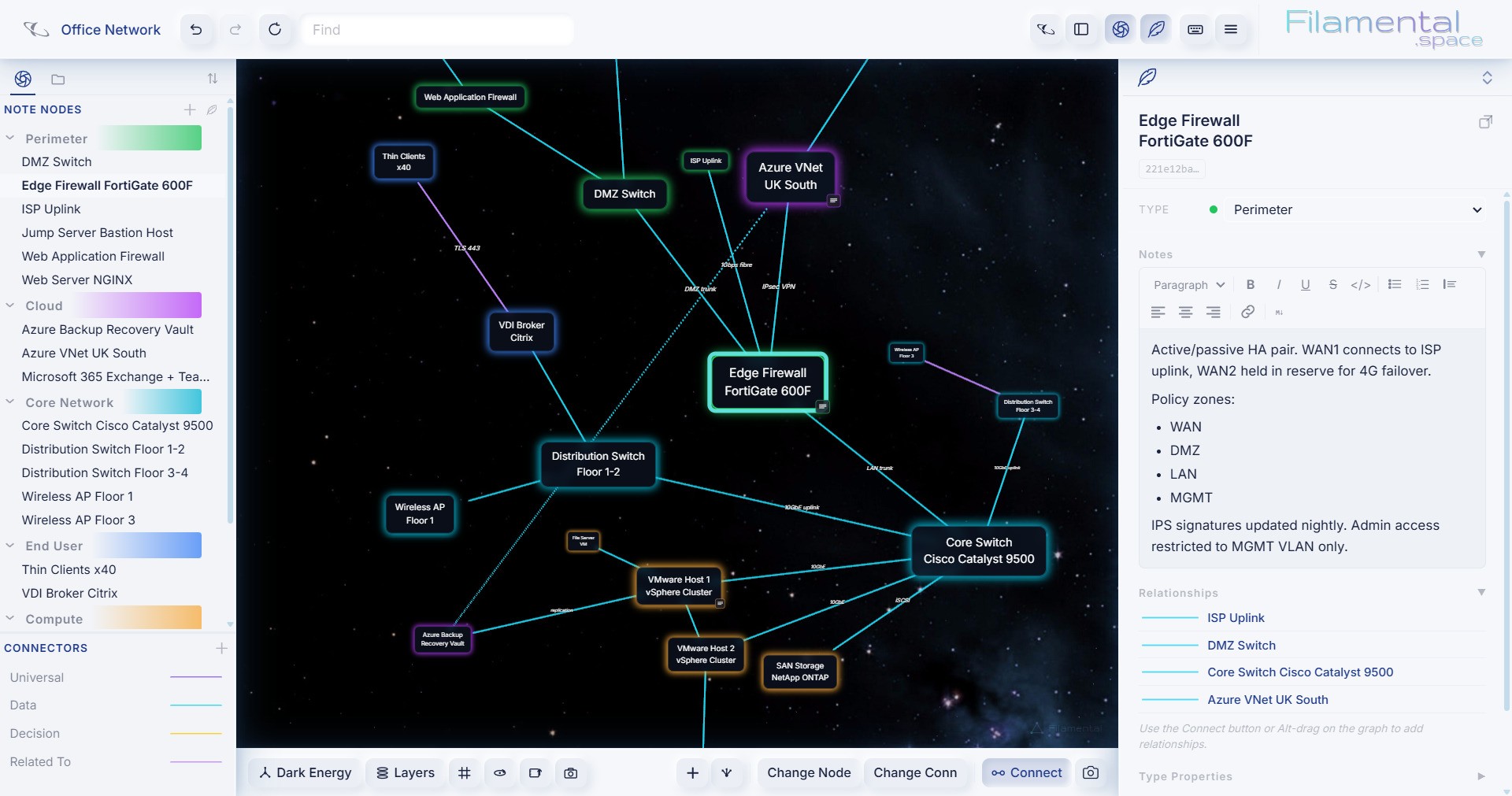
Map what is actually there
The structure of your infrastructure as you really see it.
Servers, services, vendors, integrations, the people who own each of them.
Connect what depends on what. The picture in your head becomes a picture other people can see.
Keep the knowledge with the work
Every node is a working document. Attach the runbook to the service. Note the vendor contact next to the integration. Record the dependency you only discovered the last time something broke.
The map and the manual are the same thing.
Hand it over without losing it
When someone joins, they read the World instead of asking questions that have been answered before.
When someone leaves, the knowledge stays. The structure they built is plain Markdown on disk, readable by anyone, openable in any editor.

Independent, agnostic, sovereign.
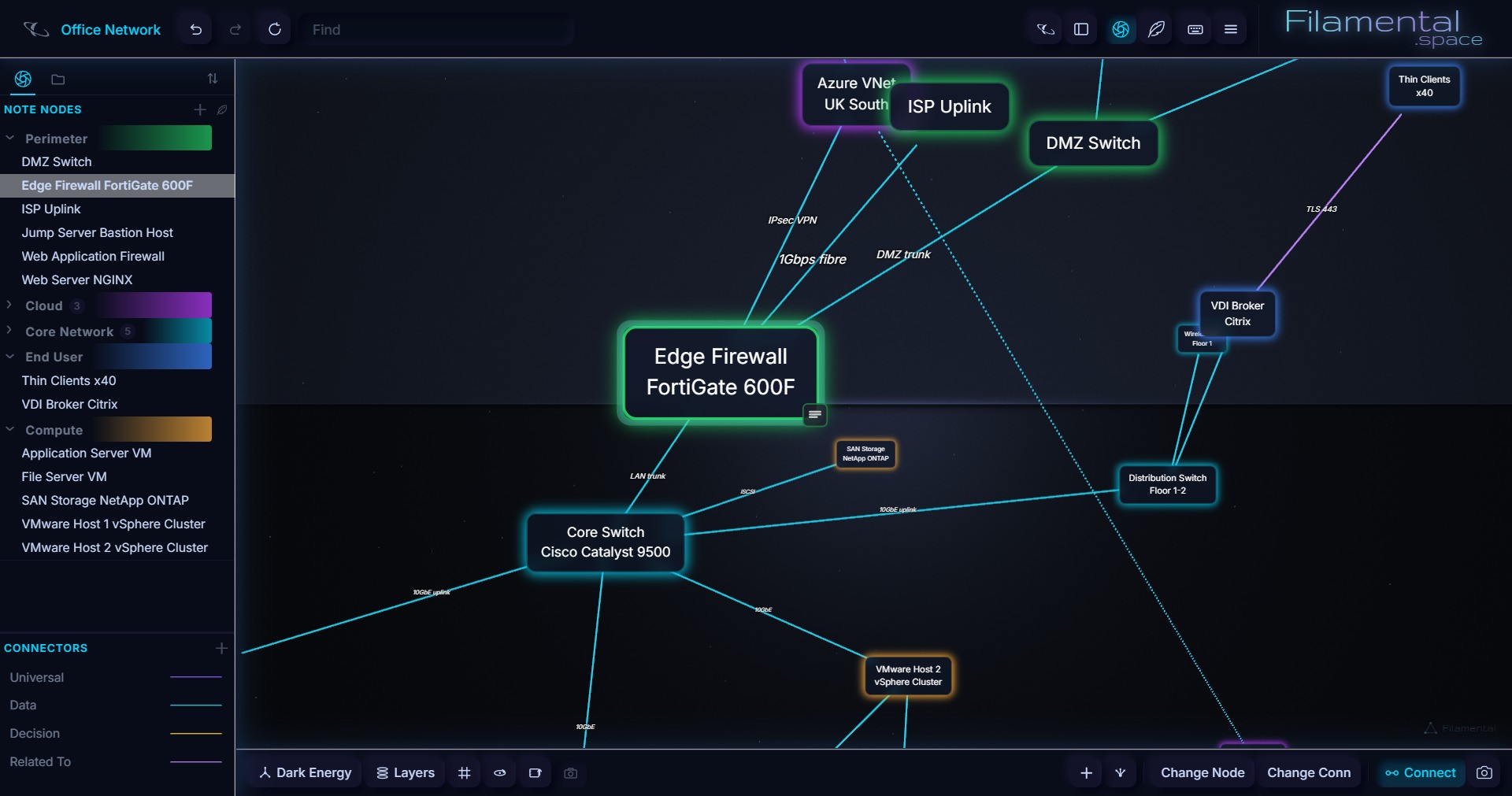
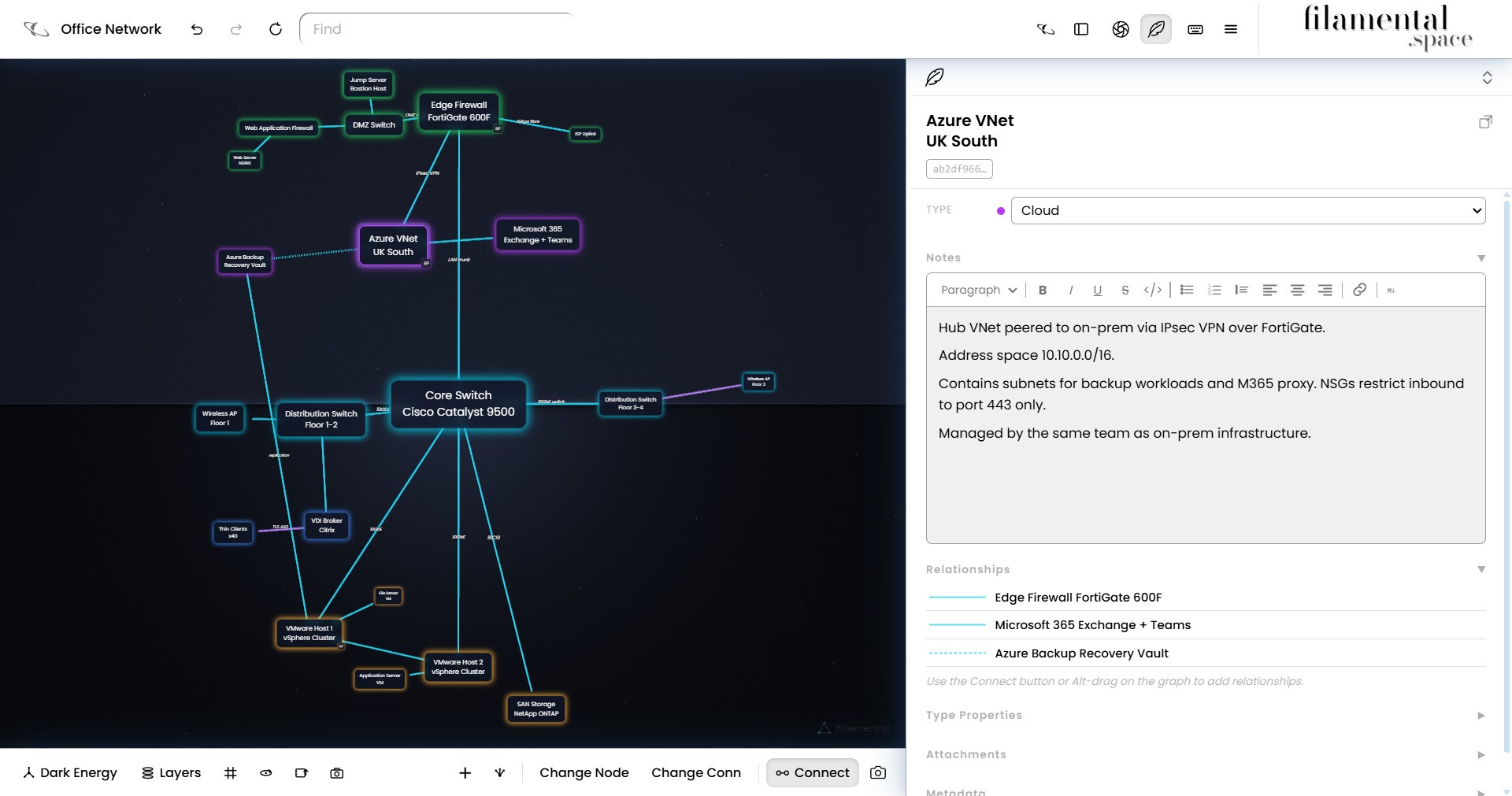
Quickly switch your perspective to suit what you are working on using Dark Energy (repulsion) or Layers (by node types).
Filamental runs on Tauri (a Rust-based desktop framework) meaning a fraction of the memory footprint of an Electron app, no bundled browser to manage, and all data stored locally on the device.
You Deserve Better
Filamental does not require you to learn a new method. You already think in dependencies and relationships. The tool is shaped around that.
The learning curve is the time it takes to map the first few systems you already know. Camera and selection conventions follow standard professional software. The controls feel familiar from the first session.
It's fully extensible with frontmatter, property fields and everything is built to last because files are plain Markdown and YAML.
The work survives the tool, the vendor, the employees and the job.